 info@credit-essense.com
 (816) 839-4020

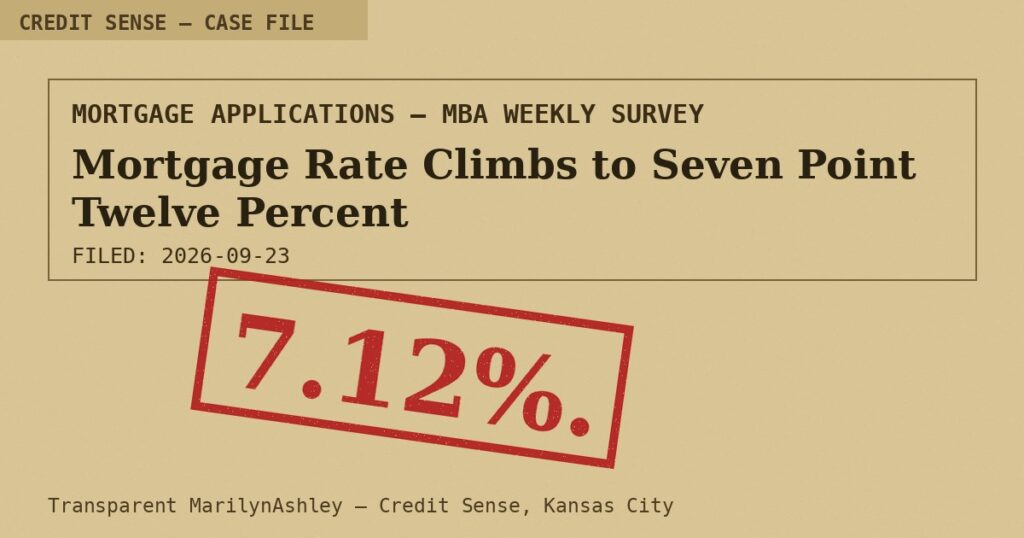
Mortgage Applications Fall as the MBA 30-Year Rate Hits 7.12 Percent
Yall, if you have been watching mortgage rates and waiting for a break... this week was not the break. The Mortgage Bankers Association, the MBA, reported its average contract rate for a 30-year fixed mortgage with a conforming balance rose to 7.12 percent. And when rates climb like that, applications feel it fast.
Here are the numbers, exact and early, the way I like them. The rate rose 15 basis points to 7.12 percent, up from 6.97 percent the prior week. That is its highest level since May 2024. These figures come from the MBA Weekly Mortgage Applications Survey for the week ending September 18, 2026.
Overall mortgage application volume fell 1.5 percent on a seasonally adjusted basis. Purchase applications fell 0.8 percent. Refinance applications fell 2.6 percent, and refinance volume was 62 percent lower than a year earlier. Purchase applications were 11 percent below a year earlier. Read that again. People are not just waiting a week. A lot of families have stepped back for a full year.
Two different rate numbers, and do not mix them
Now let me be precise, because this is where people get confused and where bad advice starts.
The 7.12 percent figure is the MBA average contract rate. Freddie Mac, in its own weekly survey, put the average 30-year fixed rate at 6.95 percent that same week. Those are two different surveys using different methods. They are not the same number, and nobody over here is going to blend them into one and call it a fact.
If a lender quotes you a rate, ask which survey, which loan type, and which costs sit behind that quote. A headline rate is a starting point, not your personal price.
What the rest of the survey said
The share of applications for adjustable-rate mortgages, ARMs, climbed to 9.8 percent. The average rate on a 5/1 ARM was 6.10 percent. The FHA share of applications fell to 16.7 percent, down from 16.9 percent. The VA share fell to 12.0 percent, down from 12.4 percent.
That ARM number deserves a plain-English pause. A lower starting rate can look like relief, and for some borrowers it may fit the plan. But a lower start rate is not credit repair. It does not fix errors on a report, it does not erase a late payment, and it does not change the score tier you walk in with.
What this means for your file
At rates above 7 percent, the credit tier you sit in is worth real money. Two borrowers can look at the same house, in the same week, and get very different offers because their files tell different stories. That is why the work before an application matters more than the work after a denial.
Before you apply, do this:
- Pull all three credit reports and read every tradeline, not just the score.
- Dispute errors in writing, with copies kept, and give the dispute time to land before you apply.
- Pay down revolving balances where you can, because utilization is part of the picture a lender sees.
- Avoid opening new credit right before a mortgage application unless a lender who has seen your full file tells you to.
- Keep payments current on everything. One fresh late payment can cost more than months of careful work can rebuild.
Real raw truths, yall: a rate headline is the weather. Your credit file is the house you have to live in during that weather. You cannot control the MBA number this week, but you can control whether your file is clean, current, and ready when the right week comes.
Do not wait for rates to save a file that needs fixing. Fix the file, then let the rate meet you ready.
— Marilyn Ashley, Credit Sense (Kansas City).